The ultimate and exclusive right conferred by a lawful claim or title, and subject to certain restrictions to enjoy, occupy, possess, rent, sell, use, give away, or destroy an item of property e.g Business or Product.
Ownership Structure - Activision Blizzard
Activision Blizzard Inc
Activision Blizzard, Inc. is the American holding company for Activision, Blizzard Entertainment and Sierra Entertainment and is the largest and most profitable western interactive entertainment publishing company.
It develops and publishes some of the most successful and beloved entertainment franchises in any medium, including Call of Duty, Call of Duty Online, Destiny, Skylanders, World of Warcraft, StarCraft®, Diablo®, and Hearthstone.
Headquartered in Santa Monica, California, it maintains operations throughout the United States, Europe, and Asia. Activision Blizzard develops and publishes games on all leading interactive platforms and its games are available in most countries around the world.
Public Limited Companies:
As of 2013 Activision Blizzard is a public limited company (plc) and is owned mostly by the public after it's split from its owner Vivendi. This means that Activision is run by a group of individuals that are elected as, or elected to act as, representatives of the stockholders to establish corporate management related policies and to make decisions on major company issues. Such issues include the hiring/firing of executives, dividend policies, options policies and executive compensation. Every public company must have a board of directors.
Advantages:
- Huge amounts of money can be raised from the sale of shares to the public
- Production Costs may be lower as firm gain economies of scales (mass production)
- Because of their size PLCs can often dominate the market
- It becomes easier to raise finance as financial institutions are more willing to lend to plcs
Disadvantages:
- Since anyone can buy shares, its possible for an outside company to take control of the company.
- All company accounts can be inspected by a member of the public
- Due to size they cannot deal with customers on a personal level
- The way they operate is controlled by various company acts which aim to protect shareholders
- PLCs are inflexible in what they produce.
Activision Publishing Inc.
Activision Publishing, Inc. is an American video game publisher. It was founded on October 1, 1979 and was the world's first independent developer and distributor of video games for gaming consoles.
The company launched a series of multi-million unit selling titles in the early 1980s for the Atari 2600 including Pitfall, Kaboom! and River Raid. And since then, Activision has created some of the most iconic and memorable game experiences of all time.
Today, the company is a leading worldwide developer, publisher and distributor of interactive entertainment and leisure products for various consoles, handheld platforms and the PC. Over the past five years, they have continued to thrive as a leading digital entertainment provider whose games appeal to a variety of gamers.
Activision operate in more than 15 countries including in the U.S., Canada, Brazil, Mexico, the United Kingdom, France, Germany, Ireland, Italy, Sweden, Spain, Denmark, the Netherlands, Australia, Singapore, mainland China, Hong Kong and the region of Taiwan.
Treyarch
Treyarch is an American video game developer company, founded in 1996 by Peter Akemann and Doğan Köslü, and acquired by Activision in 2001and in 2005, Gray Matter Interactive was merged into Treyarch. Treyarch are based in Santa Monica, California, it has produced multiple games, including Call of Duty: World at War, Call of Duty: Black Ops, and Call of Duty: Black Ops II.
An operating model is a representation of how an organisation operates across a range of domains in order to accomplish its function. Due to the complexity of Activision Blizzard's business structure an operating model is useful for demonstrating how individuals within the company work together, allowing for better coordination between employees.
Operating Model Activision Blizzard
SENIOR MANAGEMENT TEAM:
Senior management, executive management, or management team is a team of individuals at the highest level of organisational management who have the day-to-day responsibilities of managing a company or corporation.
They hold specific executive powers conferred onto them with and by authority of the board of directors and/or the shareholders. There are most often higher levels of responsibility, such as a board of directors and those who own the company (shareholders), but they focus on managing the senior or executive management instead of the day-to-day activities of the business.
The executive management typically consists of the heads of the firm's product and/or geographic units and of functional executives such as the chief financial officer, the chief operating officer, and the chief strategy officer. In Project Management, senior management is responsible for authorising the funding of projects.
As Activision Blizzard own Activision there decisions will have big implications on how the company operates and the senior management team from Activision will have to listen to what the senior management team at Activision Blizzard. The impact of these changes will slowly fade the further down the chain of command, this can effect studio such as Treyarch that produce games for Activision.
Positions of the Senior Management Team: CEO (Chief Executive Officer) - Robert Kotnick
As the CEO, Rob Kotick is responsible for the entire operations of the corporation and reports directly to the chairman and board of directors. It is the CEO's responsibility to implement board decisions and initiatives and to maintain the smooth operation of the firm, with the assistance of senior management. In Activision the CEO, Robert Kotick has been designated as the company's president and is one of the inside directors on the board.
CFO (Chief Financial Officer) - Dennis Durkin
Also reporting directly to the CEO, the CFO is responsible for analyzing and reviewing financial data, reporting financial performance, preparing budgets and monitoring expenditures and costs. The CFO is required to present this information to the board of directors at regular intervals and provide this information to shareholders and regulatory bodies such as the Securities and Exchange Commission (SEC). Also usually referred to as a senior vice president, the CFO routinely checks the corporation's financial health and integrity.
COO (Chief Operations Officer) - Thomas Tippl
The COO looks after issues related to marketing, sales, production and personnel. More hands-on than the CEO, the COO looks after day-to-day activities while providing feedback to the CEO. The COO is often referred to as a senior vice president.
CCO (Chief customer officer) - Brian Hodous
The CCO is the executive responsible in customer-centric companies for the total relationship with an organisation’s customers. While not a requirement that the CCO be a board-level position, to be effective, the Chief Customer Officer Council advises that the CCO must be one of the senior-most executives of the company. Chief Customer Officers typically report directly to the CEO.
Chief Strategy Officer (CSO) - Humam Sakhnini
A chief strategist, is an executive who is responsible for assisting the chief executive officer with developing, communicating, executing, and sustaining strategic initiatives. Such as;
- Communicating and implementing a company's strategy internally and externally so that all employees, partners, suppliers, and contractors understand the company-wide strategic plan and how it carries out the company's overall goals.
- Driving decision-making that creates medium- and long-term improvement.
- Establishing and reviewing key strategic priorities and translating them into a comprehensive strategic plan.
- Monitoring the execution of the strategic plan.
Each senior manager has there own team of staff to support them, every few weeks senior managers will have meetings in which they will create and develop business plans also forming decisions on how to operate the business.
A product is an item offered for sale. Products can be services or an item either physical (e.g Disc) or in virtual or cyber form (Download). Every product is made at a cost and each is sold at a price. The price that can be charged depends on the market, the quality, the marketing and the segment that is targeted. The purpose of a product is to satisfy consumer needs/demands and help firms generate revenues.
Product
Activision Blizzard do not directly create products they are the holding company of Activision which is a games publisher. Game Publishers own one or more studios e.g Treyarch and are in control of what games are produced and who for. As a studio it is then Treyarch's responsibility to create the game, which is then distributed by Activision.
Activision has published 100's of game titles since it was founded, this is largely thanks to the fact that it owns over 13 studios that produce a range of interactive media products for all platforms varying from phones to Desktop PCs but mostly consoles. One of Activision's most popular franchises is Call of Duty, a first person shooter that started on PC with Call of Duty (launched 2003) and later expanded to consoles and handhelds.
Several spin-off games have also been released. The earlier games in the series are set primarily in World War II, including Call of Duty, Call of Duty 2, and Call of Duty 3. Beginning with Call of Duty 4: Modern Warfare, which is set in modern times, the series has shifted focus away from World War II. Modern Warfare (released November 2007) was followed by Call of Duty: World at War and Call of Duty: Modern Warfare 2. Black Ops (released November 2010) takes place in the Cold War, while Modern Warfare 3 (released November 2011) takes place in a near-future setting. Black Ops II (released November 2012) takes place in the year 2025. Call of Duty: Ghosts was released in November 2013. The most recent title was Advanced Warfare (released November 2014).
The Call of Duty games are published and owned by Activision. While the studio Infinity Ward primarily still develops them, Treyarch has also developed several of the titles with the release of the studios' games interlaced with each other. Some games have been developed by Gray Matter Interactive, Nokia, Exakt Entertainment, Spark Unlimited, Amaze Entertainment, n-Space, Aspyr, Rebellion Developments, Ideaworks Game Studio, Sledgehammer Games, and nStigate Games. The games use a variety of engines, including the id Tech 3, the Treyarch NGL, and the IW 5.0.
As of November 11, 2011, the Call of Duty series has sold over 100 million copies. As of March 31, 2012 there are 40 million monthly active players across all of the Call of Duty titles, with 10 million users of the online service Call of Duty: Elite and 2 million paying annual members. Over 1.6 billion hours of online gameplay have been logged on Modern Warfare 3 since its 2011 release Sales of all Call of Duty games topped US$10 billion, according to Activision.
Call of Duty however is not Activision Blizzards only product, AB have also produced the hugely successful World of Warcraft (WoW) , a MMORPG in which players play in a consistent world with thousands of players. WoW is the most popular subscription based game currently around having around 7.1 million players subscribed and 12 million at its peak in 2011.
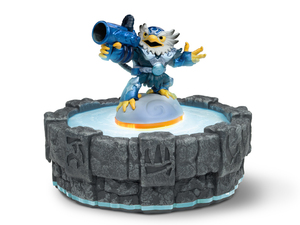
Activision have also produced other smaller titles such as Skylanders, a title targeting younger audiences that involves collecting toy figurines that can then be used in game by placing the model on a 'portal'. This is a highly innovative concept that first introduced combing real toys and placing them inside a game.
Market position shows a firm its performance in comparison to its competitors, reflecting on its market share and what it specialises in. This helps firms to develop new business strategies with regards to how to gain more market share and out perform competitors, thus increasing profits.
This graph below shows the increase in AB's share price, after the release of the CoD series this grew exponentially larger.
Market position shows the managers of Activision Blizzard the performance of the business in comparison to it's competitors, mostly with regards to financial performance. The advantage of this is that it allows then to gain perspective on what they are doing right and wrong in their operation, allowing them to make adjustments to projects or policies that could be causing issues, thus being able to remove any error while also adapting to the market and their competition. This allows AB to plan the release of new titles and helps them manage stocks and investment protecting share holders.
The information below is from AB's 2014 annual report and illustrates to shareholders how well AB have grown financially.
Activision Blizzard has dominated the FPS domain for the last 5 years, primarily driven by the Call of Duty franchise. Activision went into the holiday period with two new and highly awaited titles: Call of Duty: Advanced Warfare and Destiny. Call of Duty: Advanced Warfare sold nearly 7.2 million units on all the major platforms in the first week of its release. As of January 3, the title has sold approximately 17.6 million units, leading in the FPS genre.
Already a dominant force in the FPS genre, Activision aims at strengthening its hold over the segment, as Electronic Arts is rapidly climbing up the ladders in this segment with its Titanfall & Battlefield franchises stealing market share from Activision’s Call of Duty.
A competitor is any person or entity which is a rival against another. In business, a company in the same industry or a similar industry which offers a similar product or service. The presence of one or more competitors can reduce the prices of goods and services as the companies attempt to gain a larger market share. Competition also requires companies to become more efficient in order to reduce costs.
Nintendo:
Nintendo Co., Ltd. is a Japanese multinational consumer electronics company headquartered in Kyoto, Japan. Nintendo is the world's largest video game company by revenue. Founded on September 23, 1889, by Fusajiro Yamauchi.
Nintendo has long been a huge competitor in the video game business producing it's own game and system in an example of vertical integration. Nintendo is one of the most solid consistent video game company in the business, but poses a minor threat to Activision Blizzard since Nintendo's games rarely step into the same territory as Activision Blizzard staying on its own game system.
Electronic Arts:
Electronic Arts, Inc. (EA), also known as EA Games, is an American developer, marketer, publisher and distributor of video games headquartered in Redwood City, California, United States.
Founded and incorporated on May 28, 1982 by Trip Hawkins, the company was a pioneer of the early home computer games industry and is notable for promoting the designers and programmers responsible for its games. In 2011 Electronic Arts was the world's third-largest gaming company by revenue after Nintendo and Activision Blizzard.
EA is a major competitor in the video game market. It has produced hit after hit. Hits include Mass Effect 3, Madden, and The Sims. Star Wars: The Old Republic an MMO in direct competition with World of Warcraft. During the Beta for Star Wars: The Old Republic WoW lost nearly two million subscribers putting earning it the title "WoW Killer" and with the game still young there is a lot of potential for it to grow.
Advantages over competitors:
AB has the huge advantage over many of it's competitors in that it can produce a wide range of products that appeal to a vast range of market segments e.g Age, interests, socio-economic factors.
This is because AB owns multiple studios which at any moment can begin producing products.
A) Purpose:This game has been created primarily for entertainment purposes and develops from the previous title Call of Duty: Modern Warfare (2007) continuing Activisions greatly successful Call of Duty franchise, which continues to this day. This title was created for PS3, Xbox 360 and PC As of November 2013, the game has sold 15.7 million copies on these platforms. Other adaptations with the same titles have been created for the iPhone, PS2, Wii and other handheld consoles.
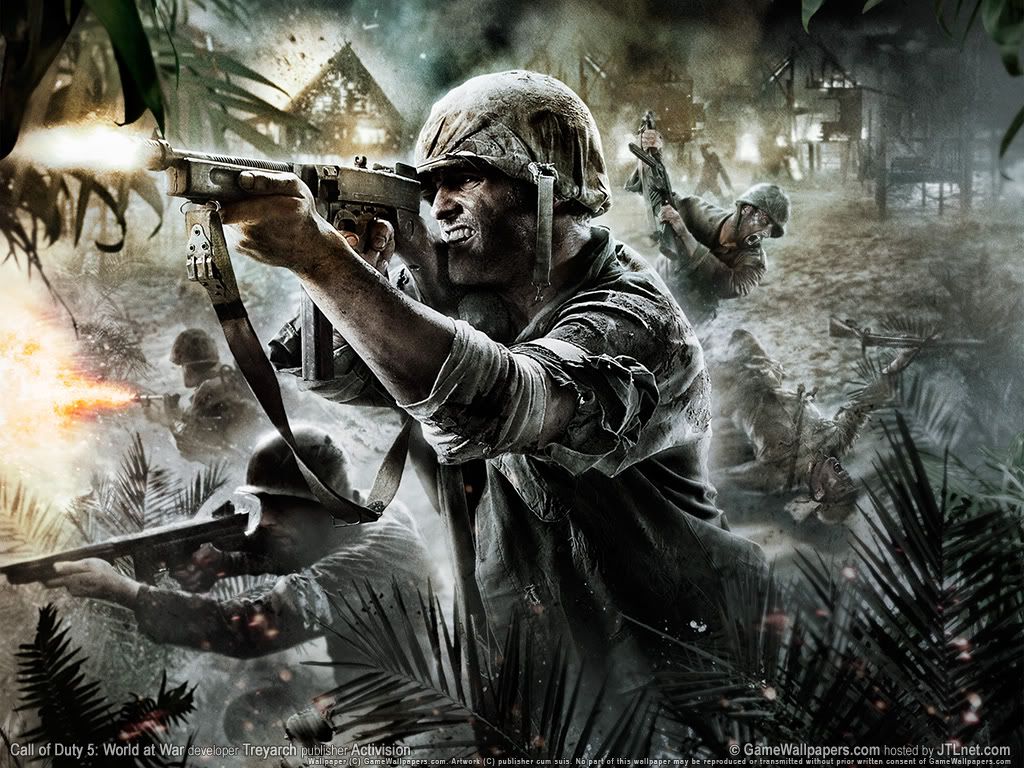
B) Form: World at War (WAW) is a unique game in contrast to other titles in the COD franchise, its feel and look have been purposefully created for the games environment and relate to its WW2 setting and genre, while also playing into its themes.
Mis-en-Scene:
The atmosphere that has been created in WAW is a dark and gritty one that has been created by the developers use of lighting, texturing and also sound design. This was clearly an intentional decision, as early concept art (shown below) shares similar looks to the final game.
I think the reason for the use of this feel and look is to express the brutality of the conflict and relate to the dark, violent and bloody gameplay, this is mostly demonstrated by the low key lighting that creates a stark contrast between light and dark as the are hard divisions between the two suggesting a more painterly style of lighting with a harder qualities that match the style of the game.
Another important aspect of creating the games atmosphere was creating realistic models with accurate uniforms and weapons the game has achieved this, and a lot of research into the era was done:
Below are character models created for the game wearing the correct uniforms and even hairstyles for the time period.
Camera Angles:
In terms of camera angles the entire game is set in a first person perspective which applies to all call of duty games, the advantage of this is that it adds to the immersion of the story and grabs the players attention. Another advantage of the first person perspective is its huge popularity in the gaming industry something which automatically gives the game a lot of attention.
Sound:
Audio design in game development is extremely important, audio helps to immerse the player in the scenario and brings the virtual world to life. This means that capturing the correct sounds for the game is vital. However one main difference between audio in games and in film is that in games audio sources must be simulated in a 3D environment, this is called occlusion. The new technology of occlusion, changes the sound made by nearby object depending on objects blocking its path e.g. walls, has been added to World at War.
The game has various levels of "muffled" sound depending on the objects it travels though e.g. a more muffled sound through a thick wall compared to a slightly muffled sound through a thin short wall. For the first time in a Call of Duty game, the player is able to tell the difference between someone walking next to the player and someone walking above or below the player, as well as telling the difference between a shot fired in the distance and a shot fired close by, but behind a solid object.
The other technology of Flux was also developed using field recording systems. The World at War crew traveled to a desert with mountains on both side of the range to test the frequencies of sounds made by World War II weapons. Microphones were placed 60 yards (55 m) behind and 60 yards in front of the gun to test the echoes. This was later replicated and developed in the studio for the game software. It means that players will be able to pinpoint a sniper rifle shot, as it reflects off them, as well as hearing the initial 'pop' of a hand grenade blowing up and then the grenade's loud "whoosh" sound that begins where the grenade blew up, and ends behind the player. The flux system also combines with the occlusion system to make a fully immersive audio environment.
To record the voices for games characters the studio hired voice actors for all characters and go through a process similar to that in creating 3D animations, voice actors such as Gary Oldman starred as main characters in WAW and will have in depth understanding of the story and their character.
Music is another vital component in the development of video games as it can be used in ways that can follow the psyche of the gameplay, helping to emphasise emotion, drama and also the intensity of the game. This has been done remarkably well in World at War as the soundtrack has a range of tracks that are all unique to the levels and content that they accompany e.g in the pacific themed missions the sound motif is used to signify the jungle and also enemy, shown below is a music track designed for one of the levels in the Pacific;
Likewise the music from the eastern front campaign is very comparable to soviet military march music from the era. In most instances this music will begin usually when a significant event is happening in the game, such as the beginning of a mission or a specific moment in the story that the developers want to highlight. Below is an example of the what I'm demonstrating;
C) Content:
Call of Duty World at War is set on the Eastern and Pacific fronts of World War 2, where the player plays as a Russian conscript and an American Marine. The story is based at historical battles throughout the war, with a twist of fiction.
Like most games WaW consists largely of two main features Campaign mode (story mode) and multiplayer mode. Campaign mode is comparable to a film, there is a set story that is completed by the player successfully achieving the objectives of the level allowing them to progress to the next stage. As the player in WaW has complete freedom over the movement of their character they can chose how they do this, but ultimately gameplay is usually similar as the mission will take place in the same 'map' and they will have to follow the set path resulting in linear gameplay that contains set game events e.g cut scenes or explosions.
The advantage of this is it gives the developers more control and can create cinematic scenes like you might find in films and can help to add more drama to the game and also immersion, however a disadvantage of this is it reduces the actual playing time which is usually the main reason consumers of these products purchase the game, this means that developers must create a good balance of the two.
Multiplayer mode however is almost an entirely different style of game the player can choose a range of 'game modes' which provide generic objectives for 2 opposing teams to complete, although multiplayer mode uses elements relating to the campaign mode the gameplay allows for more freedom and no forced actions, this means that the content is highly replay-able as each match can vary in time, pace and situation.
D) Meaning:
If any Call of Duty game has the most meaningful message to it, it would be World at War. From the colour schemes, sound design, gameplay mechanics and other visual elements each aspect of the game was created the way it was for a reason. The reason for this was to create the most harsh, gritty, brutal and immersive environment ever created in a WW2 FPS shooter, in order to evoke emotion from the player and give them a deeper understanding of the story. To do this the developers understood that the best way to emphasise this would be to use dark tones in all visual elements of the game, an example of this would be the feature of gibbing.
Gibbing is commonly found in more mature video games and is the feature that allows enemies to be broken up into 'Gibs' adding excessive amounts of gore and brutality to the combat, this was the first time this was done in a Call of Duty game and only appears in titles by Treyarch. Although described as disturbing by some critics the addition of this feature heightens the intensity of the game and helps to accurately represent the horrors experienced during combat, this could be seen as an attempt to show respect towards veterans by not censoring the horrors of war.
E) Genre:
In terms of Game genre WAW at war is a First person shooter. A First-person shooter (FPS) is a video game genre centered on gun and projectile weapon-based combat through a first-person perspective; that is, the player experiences the action through the eyes of the protagonist, and in some cases, the antagonist. The first-person shooter shares common traits with other shooter games, which in turn fall under the heading action game. From the genre's inception, advanced 3D or pseudo-3D graphics have challenged hardware development, and multiplayer gaming has been integral. In terms of the story within the game the missions and characters are fictional, however are also based on real events.
F) Intended Audience:
Call of Duty WAW has been intended for a male audience of teens and young adults, especially those with interests in WW2. The game has a mature age rating for Violence and Gore so is suggested for those of the ages 16 and upwards. Due to its use of gore the game has a feature that allows for the disabling of such features in order to appeal to a wider audience.
G) Production Process:
Games production is divided into three main stages, all of which contain multiple processes that are key to developing a good game.
Pre-Production:
Pre-production or design phase is a planning phase of the project focused on idea and concept development and production of initial design documents. The goal of concept development is to produce clear and easy to understand documentation, which describes all the tasks, schedules and estimates for the development team. The suite of documents produced in this phase is called production plan. This phase is usually not funded by a publisher, however good publishers may require developers to produce plans during pre-production.
A pitch is the initial game proposal to management within the development company and then the publishers e.g Activision, publishers are the companies that commission the title, this means they have a lot of control over the developer as they're funding them so can cancel or delay a project at any moment. This will summarise the games main selling points and why it would be profitable, which is the main objective for publishers. If this pitch is given the green light then development into the next phase will go ahead.
This next stage is known as the concept, a concept further develops from the pitch by detailing gameplay elements and concept art. For Call of Duty concept is one of the core stages, as decisions to what time period the game will be set in have huge impacts on gameplay, story and characters. Research would involve communication with fans about what they want in Call of Duty, this would involved contact through social media in order to discover what new features fans would like, this data could be collected from older titles. It is also at this point that a small crew of developers will be assembled to create quick prototypes to get a feel for the game they're creating.
Production:
Once the concept process is complete the main stages of production begin, the rest of the dev team is hired and productivity is maximised with teams specialising on smaller projects that will be combined for the final game. Ensuring that the game keeps to the correct style is vital, to ensure that this is the case their are strong communication links between teams, previous concept art is also used to guide devs.
Now full responsibility for the games sales and gameplay is placed on the developers, designers, programmers, artists and sound designers will band together in an effort to produce the highest quality game possible.
For programmers and designers this involves developing the game engine that effects the games physics and gameplay that will usually define the player base the game will attract. During this time artists will develop game characters, objects, models, textures and maps. Artists also design Heads up display e.g Crosshairs, ammo count and team details, it is important that all of these art assets relate to the theme and context of the game e.g If this game is set in the future then artwork takes on a more futuristic style.
With each year fans expect innovation and higher fidelity graphics while having the game keep its core gameplay mechanics, this means with every year the development studio has to remodel, retextured, recode and improve its core game this also means developing new lighting systems and AI. Sound design is also another vital element of the games production and has to suit the theme, genre and also individual mission/map.
One of CoDs main features is its multiplayer this is why there are usually two teams within the production team, one dedicated towards the multiplayer aspect of the game and the other dedicated towards the single player experience.
For both teams game mechanics and map design is essential to making a great game that players enjoy however the multiplayer team is usually more heavily focussed on developing the games net-code, physics, class creation and balancing the gameplay . Meanwhile single player teams focus on story, characters, level design and have a more artistic cinematic approach to the gameplay experience.
Development Team:
Designer:
A game designer is a person who designs gameplay, conceiving and designing the rules and structure of a game. Development teams usually have a lead designer who coordinates the work of other designers. They are the main visionary of the game.
Artists:
A game artist is a visual artist who creates video game art. The art production is usually overseen by an art director or art lead, making sure their vision is followed. The art director manages the art team, scheduling and coordinating within the development team.
The artist's job may be 2D oriented or 3D oriented. 2D artists may produce concept art, sprites, textures, environmental backdrops or terrain images, and user interface. 3D artists may produce models or meshes, animation, 3D environment, and cinematics. Artists sometimes occupy both roles.
Programmer:
A game programmer is a software engineer who primarily develops video games or related software (such as game development tools). The game's codebase development is handled by programmers. There are usually one to several lead programmers, who implement the game's starting codebase and overview future development and programmer allocation on individual modules.
Level designer:
A level designer is a person who creates levels, challenges or missions for computer and/or video games using a specific set of programs. These programs may be commonly available commercial 3D or 2D design programs, or specially designed and tailored level editors made for a specific game.
Level designers work with both incomplete and complete versions of the game. Game programmers usually produce level editors and design tools for the designers to use. This eliminates the need for designers to access or modify game code. Level editors may involve custom high-level scripting languages for interactive environments or AIs. As opposed to the level editing tools sometimes available to the community, level designers often work with placeholders and prototypes aiming for consistency and clear layout before required artwork is completed.
Sound engineer:
Sound engineers are technical professionals responsible for sound effects and sound positioning. They sometimes oversee voice acting and other sound asset creation. Composers who create a game's musical score also comprise a game's sound team, though often this work is outsourced.
Testers:
The quality assurance is carried out by game testers. A game tester analyzes video games to document software defects as part of a quality control. Testing is a highly technical field requiring computing expertise, and analytic competence.
The testers ensure that the game falls within the proposed design: it both works and is entertaining.This involves testing of all features, compatibility, localization, etc. Although, necessary throughout the whole development process, testing is expensive and is often actively utilized only towards the completion of the project.
Post Production:
After a few months of development the game will begin to take form giving an idea to what the final product will be like, this stage is known as the alpha stage and game testers will be hired to play the game for hours on end to find bugs, so to reduce any issues on the release date. As more and more bugs are fixed the game will get closer to completion and marketing campaigns will begin e.g teaser trailers and announcements at game festivals. During this time marketing and design teams will begin development of the games packaging to attract the largest audience. A few months later the games will be released a couple weeks before the release date the ad campaign will be at its height in order to hype up fans.
Once the title is released it is almost inevitable that new bugs will be found, as millions of players trying to play causes difficulties for servers but also increases the chances of bugs being found.
This means its vital for studios to maintain not only servers but also update the game itself to remove bugs.
Activision Blizzard Demographics of the target audience
Activision Blizzard (AB) owns a three huge entertainment companies, the primary two being Activision and Blizzard. Although owned by the same company Activision and Blizzard produce vastly different games.
Activision are well known for the highly successful Call of Duty franchise and also other games such as Skylanders and also Destiny which are mostly designed for console systems. While Blizzard's products are aimed at the PC market with games such as World of Warcraft, Heroes of the Storm and Starcraft II. All of these games range in their genre e.g Call of Duty is a Shooter, WoW is an MMO-RPG and Starcraft II is an RTS. All these games attract different audiences, and is usually dependent on factors such as age, gender and primarily interests. [1]
Thanks to AB owning a vast range of studios they can direct the creation of varying types of games that appeal to specific audiences, to do this they can segment the market to tailor their products to the type of person that wants to play a specific genre of game.
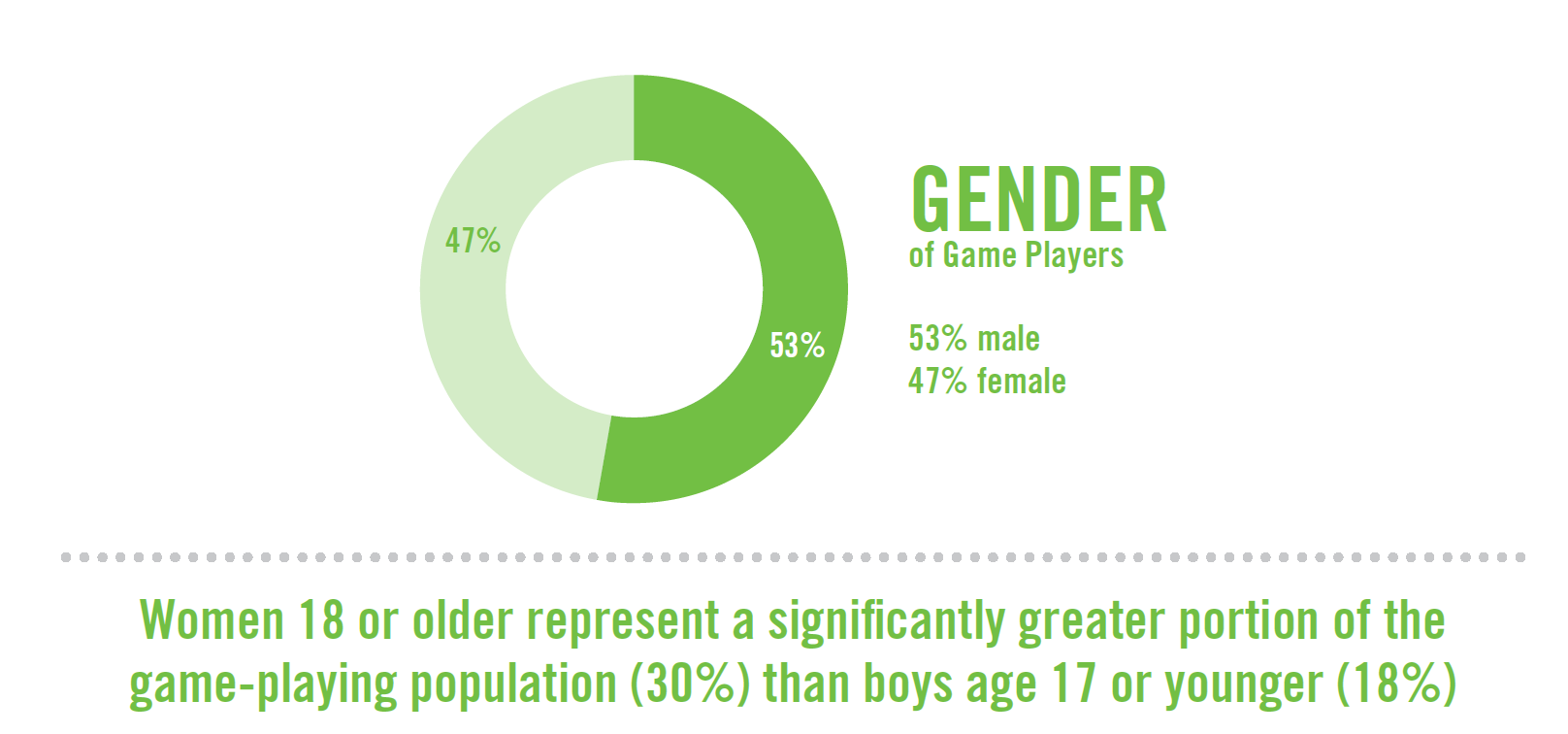
Gender: Although perceived to be significantly dominated by male audiences the video game market has a large portion of female gamers with only a 3% difference between the two genders. In terms of
the content of many of Activision's Blizzards games most would not think women would be attracted to playing them, however women 18 and above do represent a significantly greater portion of the game playing population that boys aged 17 and below. However this may vary for AB games as they are usually more male oriented with regards to themes and genre as women tend to play more casual games on mobile devices while male audiences are usually more attracted to more hardcore styles of game e.g Shooters and MMOs [2]
Age:
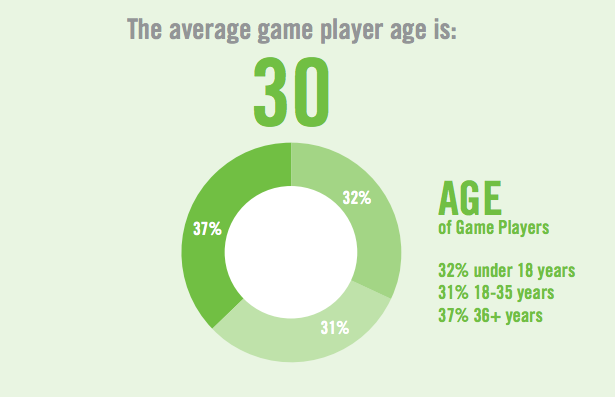
Due to the type of platform Activision's Blizzard games are played on it immediately has a big effect on the target market. Currently most console gamers are more casual gamers, they range in age but are primarily aged 11-36.
The reason for this is that consoles are considerably cheaper than PCs and many people cannot afford them but would still like to play the latest games. This often means that many PC gamers are slightly older than console players and are usually more dedicated and invest more time into their games.
This results in AB having a very mixed target audience in terms of age, this is because age isn't a significant factor in the purchasing decision of the market, consumers of games will often buy games that suit their playing style and interests. Therefore age is not a large influence on the purchasing decision of the consumer.
Lifestyle:
Once again this varies from person to person however as previously mentioned PC gamers are usually far more dedicated to gaming than console gamers, as they have invested lots of money into their system. World of Warcraft has become infamous for its addicting nature and some players spend hundreds of hours per week in game.
This also applies to Call of Duty too, however these games are designed so they can be quickly played at a moments notice so can be useful for older players who may have less time. In terms of measuring what social classes play AB's titles it varies and is rarely taken into consideration when designing the title. The only impact social class has on games is the price range as poorer people may be unable to afford the games and consoles, this suggests that these games are significantly more popular in developed countries e.g UK and USA.
Player Psychographs: [3]
Psychographs are a type of market segmentation that divide consumers, in this case (gamers) their is a wide range of 'types' of player which has a large impact on gameplay and ultimately determines who plays what and why.
When designing a game AB understand the best way to reach a wide audience is to keep in mind each of the different psychographics. Different elements of your game can appeal to different types of players, and an understanding of these psychographics allows you to ensure that everybody can find something about your game that they enjoy.
In gaming there are usually three main psychographs, they are called Timmy, Jonny and Spike.
Timmy: Timmy wants to experience something.
He is in the game for a thrill. He’s not very competitive—he just wants to have a good time. Timmy likes to do big things, and he wants to see monumental things happen. He likes to smash things, and smash them hard. Timmy plays a game for a memorable gaming experience.
Jonny: Johnny’s idea of fun is all about putting his own mark on the game. In competitive games, he doesn’t care about winning or losing—he cares about how. In a game that doesn’t have a competitive element, he enjoys any opportunity to experiment and discover. He loves sandboxes.
Spike: Spike’s idea of fun is all about mastery. He hates to lose—he has fun when he wins, and he doesn’t particularly care how he wins (this isn’t to say he that cheats—he won’t be able to really value his wins if the playing field isn’t level, so he usually despises cheaters). He has the most fun when he is the best—and when everybody knows it.
These characters can all be related to the games produced by AB, the following shows this;
Timmy: Skylanders, Call of Duty, Destiny, Prototype 2
Jonny: Diablo, World of Warcraft
Spike: Starcraft, Call of Duty, Heroes of the storm, Overwatch
As you can see some of these games cross over personalities which is required to make the game successful.
Spending Power:
Spending power is defined as the number of goods or services that can be purchased with a unit of currency. In terms of spending power when relating to consumers of games, as there is a wide variety of age ranges.
Usually younger age ranges have less purchasing power than older ranges as they do not have an income however they usually have large influences on older ages ranges as they persuade them to buy games as gifts, this can also be because of age restrictions on some content produced by AB meaning only adults have access to the product.
Conventions:
The Call of Duty Championship is an eSports event, organised by Activision and XBOX (Microsoft).
In Call of Duty eSports, four-player teams compete head-to-head in intense objective-based game modes. Building on the core Call of Duty Multiplayer experience that millions play online, the eSports variant uses a competitive ruleset that is enjoyable to both watch and play. Call of Duty eSports exists at many different levels, from casual online sessions at home to organised competitions at public venues. At the highest level, Call of Duty eSports tournaments are seen around the world by hundreds of thousands online, with the best professional teams competing for million dollar prize pools.
Major League Gaming (MLG) is a North American professional eSports organisation. MLG is headquartered in New York City, New York and was founded in 2002 by Sundance DiGiovanni and Mike Sepso.
MLG has held official video game tournaments throughout the United States and Canada. Major League Gaming competitions have been broadcast on television, ESPN.com, and other broadband sites.
The company has also been involved in television production, and game development. MLG's aim is to elevate computer and console game tournaments to viable competitive and spectator events. Major League Gaming acquired Agora Games on August 18, 2009. On 18 November 2013, MLG announced that they would be launching their premium mlg.tv streaming service which allows fans to watch games on a reliable service, boosting interactions between streamers and fans.
MLG covers many competitive games, titles from AB include Starcraft II and Call of Duty in which teams are put through rounds to knock each other out, until a winner is found. Prize money can vary from a few hundred dollars up to 1 million dollars.
Social Networking:
Social networking is an extremely important aspect of advertising for AB, this is their primary method of promotion. This is because AB's main demographic are all very active on social media/internet in general as they are teenagers and young adults. This has meant many of AB's games have a strong presences on social media sites such as Facebook, Twitter and Google +.
Many games studios also have their own sites that are filled with information and link to social media sites, this allows fans to share trailers, images and gameplay with their friends exposing more people to the game. Many game studios also have 'community managers' whose job it is to listen to the community and respond to them so people feel their voices are heard.
Below: Treyarch Community manager Josh Olin using twitter to update fans with the latest information.
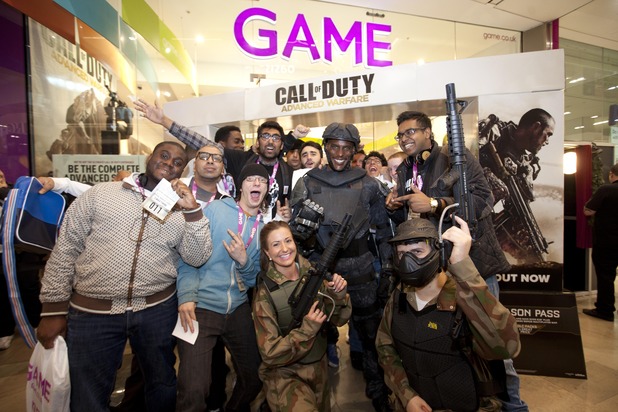
As Activision usually produces more content for console games discs copies are still very popular and are sold by companies such as GAME. Due to increases in internet speed and larger hard drives in consoles gamers can now use services such as the PS Store to download games similar to the PC service Steam. Blizzard however are primarily focused on PC games and thus make their games available to download off their site. This has slowly lead to the demise of retail outlets such as GAME selling goods on the high street.
Although some countries may ban or restrict the sale or possession of AB's titles e.g Call of Duty WAW in Germany/ China in general nearly all of AB's titles are available on a global scale so long as you have fast enough internet.
Digital Downloads:
Activision Blizzards main distribution channel is through digital downloads, however they do still sell content on disc. The reason for this is Blizzard (one of their subsidiaries) only produce digital content that can be transferred through online services such as Steam, PlayStation and Xbox stores and also their own sites.
PSN Store:
This is a site accessible through the PlayStation only, and allow for users to purchase goods online and instantly download content e.g Call of Duty DLC's ( downloadable content). Consumers prefer this method of distribution as it's faster than visiting a store and games are often much cheaper.
Xbox Games Store:
Similarly the Xbox has its own digital marketplace in which buyers can purchase games online.
Battle.net launcher:
The battle.net launcher is a program downloaded from the battle.net website owned by Blizzard, this launcher can be downloaded free then once logged in you can download the games you've purchased via the launcher.
Steam:
Although not used by Blizzard, Activision use Steam, the most used gaming service in the world to sell games such as Call of Duty. Steam is also free to download therefore easily accessible, so long as you have the correct PC specs and an internet connection.