Activision Blizzard Demographics of the target audience
Activision Blizzard (AB) owns a three huge entertainment companies, the primary two being Activision and Blizzard. Although owned by the same company Activision and Blizzard produce vastly different games.
Activision are well known for the highly successful Call of Duty franchise and also other games such as Skylanders and also Destiny which are mostly designed for console systems. While Blizzard's products are aimed at the PC market with games such as World of Warcraft, Heroes of the Storm and Starcraft II. All of these games range in their genre e.g Call of Duty is a Shooter, WoW is an MMO-RPG and Starcraft II is an RTS. All these games attract different audiences, and is usually dependent on factors such as age, gender and primarily interests. [1]
Thanks to AB owning a vast range of studios they can direct the creation of varying types of games that appeal to specific audiences, to do this they can segment the market to tailor their products to the type of person that wants to play a specific genre of game.
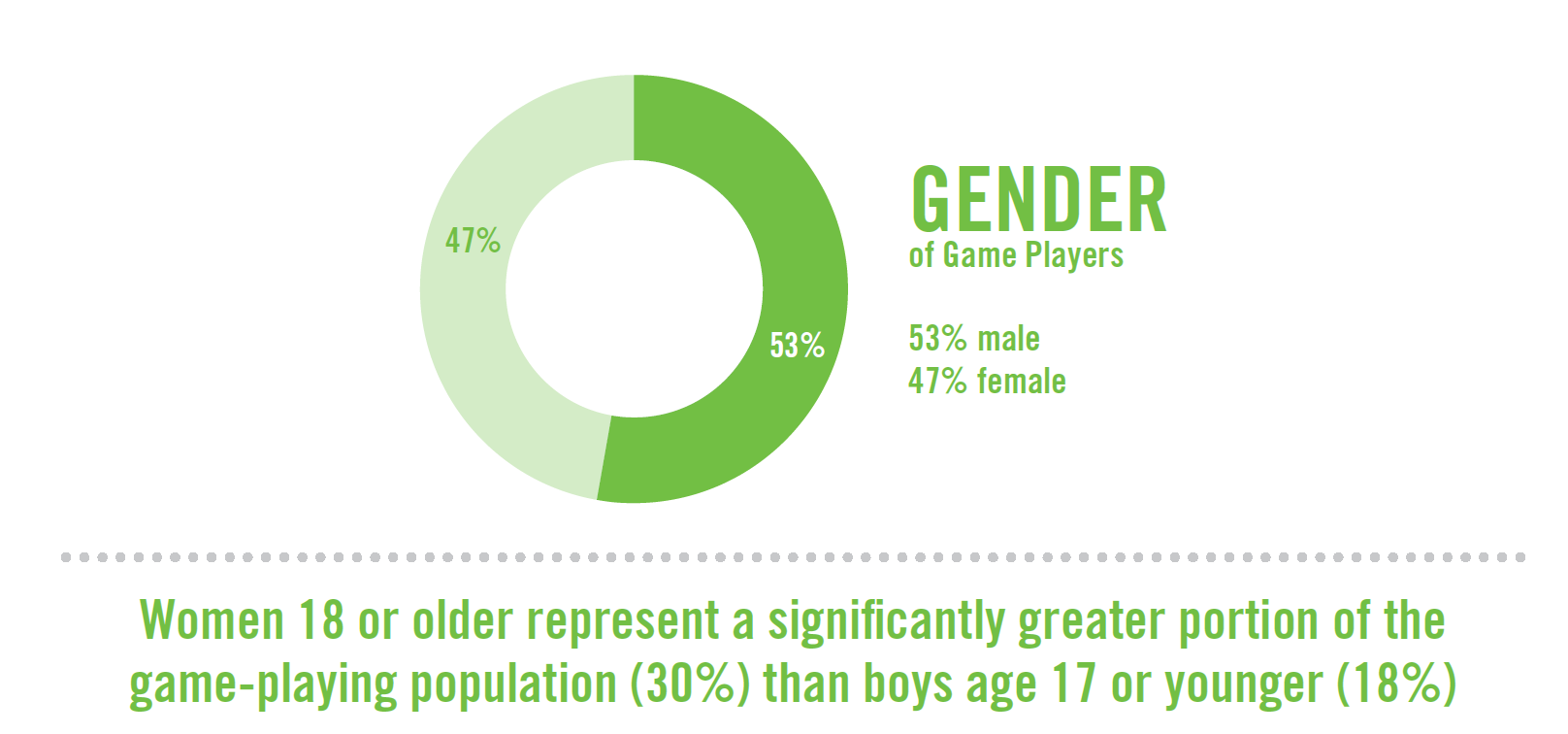
Gender: Although perceived to be significantly dominated by male audiences the video game market has a large portion of female gamers with only a 3% difference between the two genders. In terms of
the content of many of Activision's Blizzards games most would not think women would be attracted to playing them, however women 18 and above do represent a significantly greater portion of the game playing population that boys aged 17 and below. However this may vary for AB games as they are usually more male oriented with regards to themes and genre as women tend to play more casual games on mobile devices while male audiences are usually more attracted to more hardcore styles of game e.g Shooters and MMOs [2]
Age:
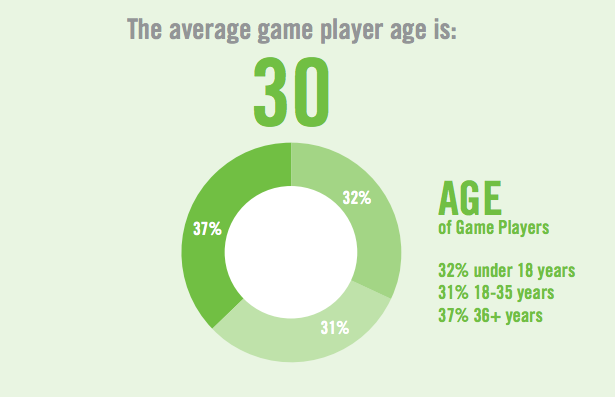
Due to the type of platform Activision's Blizzard games are played on it immediately has a big effect on the target market. Currently most console gamers are more casual gamers, they range in age but are primarily aged 11-36.

The reason for this is that consoles are considerably cheaper than PCs and many people cannot afford them but would still like to play the latest games. This often means that many PC gamers are slightly older than console players and are usually more dedicated and invest more time into their games.

This results in AB having a very mixed target audience in terms of age, this is because age isn't a significant factor in the purchasing decision of the market, consumers of games will often buy games that suit their playing style and interests. Therefore age is not a large influence on the purchasing decision of the consumer.
This results in AB having a very mixed target audience in terms of age, this is because age isn't a significant factor in the purchasing decision of the market, consumers of games will often buy games that suit their playing style and interests. Therefore age is not a large influence on the purchasing decision of the consumer.
Lifestyle:
Once again this varies from person to person however as previously mentioned PC gamers are usually far more dedicated to gaming than console gamers, as they have invested lots of money into their system. World of Warcraft has become infamous for its addicting nature and some players spend hundreds of hours per week in game.
This also applies to Call of Duty too, however these games are designed so they can be quickly played at a moments notice so can be useful for older players who may have less time. In terms of measuring what social classes play AB's titles it varies and is rarely taken into consideration when designing the title. The only impact social class has on games is the price range as poorer people may be unable to afford the games and consoles, this suggests that these games are significantly more popular in developed countries e.g UK and USA.
Player Psychographs: [3]
Psychographs are a type of market segmentation that divide consumers, in this case (gamers) their is a wide range of 'types' of player which has a large impact on gameplay and ultimately determines who plays what and why.

When designing a game AB understand the best way to reach a wide audience is to keep in mind each of the different psychographics. Different elements of your game can appeal to different types of players, and an understanding of these psychographics allows you to ensure that everybody can find something about your game that they enjoy.
In gaming there are usually three main psychographs, they are called Timmy, Jonny and Spike.
Timmy: Timmy wants to experience something.
He is in the game for a thrill. He’s not very competitive—he just wants to have a good time. Timmy likes to do big things, and he wants to see monumental things happen. He likes to smash things, and smash them hard. Timmy plays a game for a memorable gaming experience.

Jonny: Johnny’s idea of fun is all about putting his own mark on the game. In competitive games, he doesn’t care about winning or losing—he cares about how. In a game that doesn’t have a competitive element, he enjoys any opportunity to experiment and discover. He loves sandboxes.
Spike: Spike’s idea of fun is all about mastery. He hates to lose—he has fun when he wins, and he doesn’t particularly care how he wins (this isn’t to say he that cheats—he won’t be able to really value his wins if the playing field isn’t level, so he usually despises cheaters). He has the most fun when he is the best—and when everybody knows it.

These characters can all be related to the games produced by AB, the following shows this;
Timmy: Skylanders, Call of Duty, Destiny, Prototype 2
Jonny: Diablo, World of Warcraft
Spike: Starcraft, Call of Duty, Heroes of the storm, Overwatch
As you can see some of these games cross over personalities which is required to make the game successful.
Spending Power:
Spending power is defined as the number of goods or services that can be purchased with a unit of currency. In terms of spending power when relating to consumers of games, as there is a wide variety of age ranges.

Usually younger age ranges have less purchasing power than older ranges as they do not have an income however they usually have large influences on older ages ranges as they persuade them to buy games as gifts, this can also be because of age restrictions on some content produced by AB meaning only adults have access to the product.
Conventions:


Usually younger age ranges have less purchasing power than older ranges as they do not have an income however they usually have large influences on older ages ranges as they persuade them to buy games as gifts, this can also be because of age restrictions on some content produced by AB meaning only adults have access to the product.
Conventions:

The Call of Duty Championship is an eSports event, organised by Activision and XBOX (Microsoft).
In Call of Duty eSports, four-player teams compete head-to-head in intense objective-based game modes. Building on the core Call of Duty Multiplayer experience that millions play online, the eSports variant uses a competitive ruleset that is enjoyable to both watch and play. Call of Duty eSports exists at many different levels, from casual online sessions at home to organised competitions at public venues. At the highest level, Call of Duty eSports tournaments are seen around the world by hundreds of thousands online, with the best professional teams competing for million dollar prize pools.

Major League Gaming (MLG) is a North American professional eSports organisation. MLG is headquartered in New York City, New York and was founded in 2002 by Sundance DiGiovanni and Mike Sepso.
MLG has held official video game tournaments throughout the United States and Canada. Major League Gaming competitions have been broadcast on television, ESPN.com, and other broadband sites.
The company has also been involved in television production, and game development. MLG's aim is to elevate computer and console game tournaments to viable competitive and spectator events. Major League Gaming acquired Agora Games on August 18, 2009. On 18 November 2013, MLG announced that they would be launching their premium mlg.tv streaming service which allows fans to watch games on a reliable service, boosting interactions between streamers and fans.
MLG covers many competitive games, titles from AB include Starcraft II and Call of Duty in which teams are put through rounds to knock each other out, until a winner is found. Prize money can vary from a few hundred dollars up to 1 million dollars.
Social Networking:
Social networking is an extremely important aspect of advertising for AB, this is their primary method of promotion. This is because AB's main demographic are all very active on social media/internet in general as they are teenagers and young adults. This has meant many of AB's games have a strong presences on social media sites such as Facebook, Twitter and Google +.

Many games studios also have their own sites that are filled with information and link to social media sites, this allows fans to share trailers, images and gameplay with their friends exposing more people to the game. Many game studios also have 'community managers' whose job it is to listen to the community and respond to them so people feel their voices are heard.
Below: Treyarch Community manager Josh Olin using twitter to update fans with the latest information.

[1] http://files.shareholder.com/downloads/ACTI/251315850x0x822202/B3182DA4-35AA-41BABA4D-CE8014B533BB/ATVI_2015_Annual_Report_Spread.pdf
[2] http://www.geekquality.com/average-gamer-myth/
[3]http://finalbossblues.com/player-psychographics/
[2] http://www.geekquality.com/average-gamer-myth/
[3]http://finalbossblues.com/player-psychographics/

No comments:
Post a Comment